Core Nutrients
Nutrition priorities while you're on GLP-1, GIP, or glucagon agonist medications. Protein, fiber, hydration, and micronutrients to keep an eye on to protect your muscles and energy for people on weight-loss or diabetes medications like Ozempic, Wegovy, Mounjaro, Zepbound, and Retatrutide.
Educational purposes only. This information is not a substitute for personalized medical or nutrition advice. Always consult your clinician before starting any supplement or changing your diet.
GLP Wow may earn a small commission from purchases made through links on this page, at no extra cost to you. This does not influence our recommendations.
High-Quality Protein
One of the most important nutrition priorities on GLP-1s. When appetite drops, protein intake crashes — and so does your muscle mass, metabolism, and energy. Getting enough protein is one of the most important priorities you can focus on.

When you eat your protein matters almost as much as how much you get in a day. A good target is 20 to 30 grams of high-quality protein per meal — that's roughly the amount in a cup of Greek yogurt or a small chicken breast — which is enough to flip on your body's muscle-building signals. Eating a lot more than that in one sitting doesn't give you extra benefit, so spreading smaller amounts across the day — what nutritionists call "protein pacing" — is especially important when your appetite is low. Whole-food sources like Greek yogurt, cottage cheese, eggs, and lean meats should be your first priority whenever you can manage them.
To make sure your body can actually put that protein to use, you also need enough of a few micronutrient "co-factors" — meaning vitamins and minerals that don't build muscle themselves but help the chemical reactions that do. Vitamin D, B12, and zinc are the main ones to watch; without enough of them, your body struggles to process amino acids and turn the protein you eat into real muscle.
When food volume is too low to hit your protein needs through meals alone, you can get more out of every gram of protein by paying attention to leucine — a specific amino acid (amino acids are the small building blocks your body strings together to make muscle) that acts like the "on switch" for building muscle. Whey protein is naturally rich in leucine, and you can give your muscles an extra layer of protection by adding 3 to 5 grams of creatine monohydrate to your day — that's about a teaspoon of a widely studied, inexpensive powder that helps refuel the short bursts of energy your muscles use during effort. Creatine works alongside protein to supply the energy needed for muscle repair and retention when you're eating far less than usual. Together, this pairing helps your body prioritize losing fat while keeping your "metabolic engine" — meaning your muscle mass, which is what burns calories for you around the clock — intact and strong.
Targeted Electrolytes
For hydration support (sodium, potassium, magnesium), especially when appetite and fluid intake drop. GLP-1 users are chronically under-hydrated without realizing it.

Beyond just eating less, it helps to know that GLP-1 medications actually dial down the thirst signal in your brain — specifically in a small region called the hypothalamus that controls things like hunger, thirst, and body temperature. Because the medication basically "turns off" your natural urge to drink, you can't count on feeling thirsty to tell you when to sip. To stay ahead of a slow, creeping dehydration, a commonly cited general target is about 2–3 liters (64–100 ounces) of fluid a day for many adults — that's roughly four to five standard water bottles spread across the day, taken in small, frequent sips rather than big gulps that can overwhelm a digestive system that's already running slower than usual. Individual needs vary based on your body size, activity level, and health status; your clinician can help you find your personal target.
Dehydration is also a bit of a "side effect multiplier" — meaning it makes other GLP-1 problems like nausea and constipation noticeably worse. Because you're eating less food overall, you're also missing out on the water that usually comes from water-rich fruits and vegetables, which normally make up about 20% of your daily fluid intake. One simple way to check whether you're actually hydrated is to notice how often you're using the bathroom; well-hydrated adults typically go seven or more times a day, and your urine should look pale yellow rather than dark.
You need to be extra proactive with fluids and electrolytes during dose titration (that's the period when you're stepping up to a higher dose) and in the 24–72 hours after each injection, since that's when fluid loss from your gut is most likely to spike. If you're hit with persistent vomiting or diarrhea and don't aggressively replace those minerals, it can lead to acute kidney injury — a serious complication flagged in the FDA warnings for these medications. And one friendly safety note: if you already have high blood pressure, talk to your provider before reaching for a very high-sodium electrolyte mix, since some popular formulas are built for extreme athletic sweat loss, not everyday GLP-1 maintenance.
When nausea makes plain water hard to get down, try room-temperature drinks or warm herbal teas like ginger or peppermint — ice-cold beverages can sometimes trigger stomach cramping or extra discomfort. You can also sneak in hydration through what you eat: "high-water, high-value" foods like cucumbers, melons, and bone broth give you fluid and a little functional protein at the same time. Setting a simple "sipping schedule" — a phone reminder or a measured water bottle — helps keep your intake steady through the day, even when your appetite and thirst are at their lowest.
Soluble Fiber
For digestion support (psyllium husk or Sunfiber®), introduced slowly and carefully so you actually feel better — not worse.

It helps to know that fiber isn't just a remedy for constipation — it works alongside your medication by nudging your gut to release its own GLP-1 and a related hormone called peptide YY (these are natural messengers your body makes in the gut that help steady blood sugar and fullness). That little hormonal boost can help you get more of the metabolic benefit from your treatment. At the same time, while soluble fibers like psyllium are great for softening stool, your body also needs insoluble fiber — the rougher, "roughage" kind that doesn't dissolve in water but adds bulk to move things along. You'll find it in leafy greens, nuts, and the skins of fruit, and it provides the physical "nudge" your digestive tract needs to keep moving when the medication has slowed it down.
Clinical experts suggest a baseline of 64 to 96 ounces (roughly 2 to 3 liters) of non-caffeinated fluid a day, and this matters even more when you're increasing fiber. Because GLP-1 medications slow the passage of food through your colon (the last stretch of your digestive tract), your colon ends up pulling more water out of your waste — so taking a bulk-forming fiber without drinking aggressively is, in the words of clinicians, like "adding more cars to a traffic jam," and it can actually lead to severe impaction or acute kidney stress. Well-hydrated users should aim for seven or more bathroom visits a day to make sure their system can handle the added fiber load.
Dietary targets should eventually reach about 25 grams of fiber a day for women and 38 grams for men — but you have to climb toward these numbers very slowly, adding only about 5 grams a week (a process called titration, meaning a gradual step-up) to avoid overwhelming your gut. To hit these numbers while eating smaller portions, prioritize "high-value" whole foods like raspberries, chia seeds, lentils, and avocados. These whole-food sources beat supplements because they also deliver micronutrients like Vitamin D, magnesium, and potassium — minerals that are frequently depleted in GLP-1 users simply because total food volume is lower.
Finally, a sudden jump in fiber when your stomach emptying is already delayed can cause carbohydrates to sit and ferment — meaning bacteria break them down and produce gas — leading to painful bloating, trapped gas, and the "sulfur burps" many GLP-1 users recognize. To soften this, many nutritionists suggest cooking or steaming vegetables rather than eating them raw during the early weeks of treatment, since heat makes them easier for a hypomotile (meaning slower-moving) stomach to process. If you struggle to hit your fiber targets through food alone, consider a fiber-enriched protein shake, which can help you meet both your fiber goals and your critical muscle-preserving protein goals at the same time.
Magnesium
For digestion and muscle support (citrate or oxide), with education on the different forms and what they do. The form you choose matters more than you think.
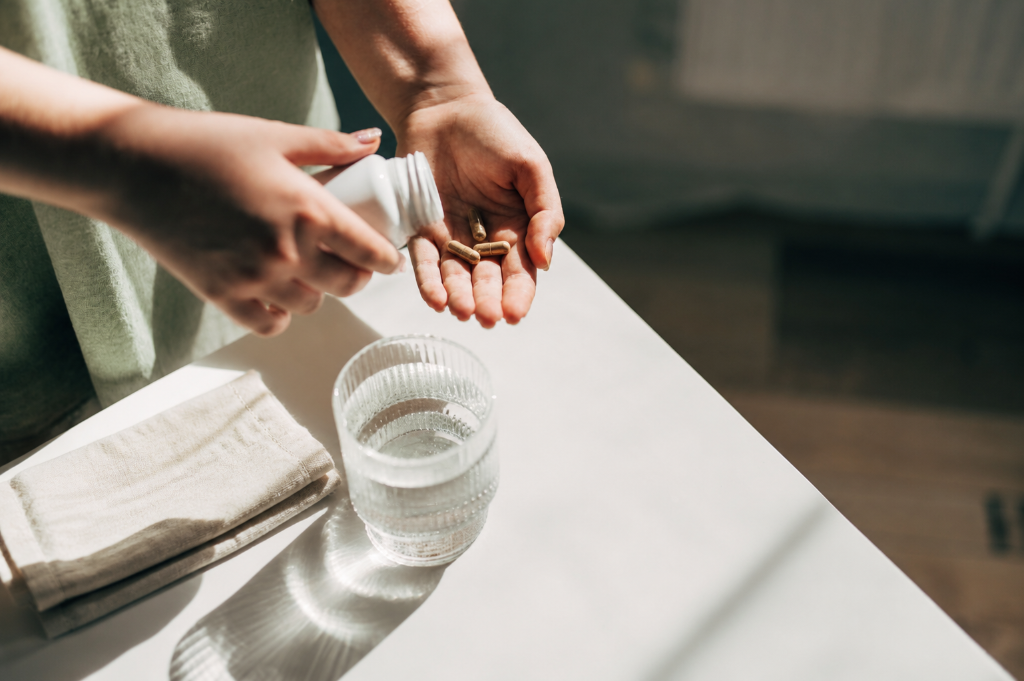
Beyond the form you choose, it helps to understand how this mineral works alongside your medication. Magnesium is a helper in over 300 chemical reactions in the body — including the ones that control insulin (the hormone that moves sugar from your blood into your cells) and how your body processes that sugar. For GLP-1 users, keeping your magnesium levels up isn't just about avoiding leg cramps; low magnesium has been linked to insulin resistance — meaning your body doesn't respond well to insulin, so blood sugar stays higher — and to a higher risk of heart and blood vessel problems. By keeping your magnesium in a good range, you're supporting the same metabolic goals your medication is working toward, which may help it do its job better.
You also need to be aware of safety limits and kidney health. The Recommended Dietary Allowance (RDA) — the daily intake thought to be enough for most healthy adults — for total magnesium is roughly 310–420 mg a day, but the Tolerable Upper Intake Level (the most you should take in supplement form without medical supervision, often called the UL) is 350 mg per day for adults. Going above that supplement limit can trigger diarrhea, which can dangerously pile onto the stomach side effects GLP-1s already cause. Most importantly, if you have chronic kidney disease, never start magnesium without direct medical supervision, because kidneys that aren't filtering well can't clear the extra mineral, and the buildup can lead to life-threatening toxicity (a condition called hypermagnesemia, meaning too much magnesium in the blood).
Timing matters too, because magnesium can get in the way of other medications being absorbed. For example, if you take levothyroxine (a thyroid hormone replacement), you need to space it at least four hours apart from your magnesium or it won't work as well. Magnesium can also reduce the absorption of certain antibiotics (like tetracyclines and fluoroquinolones) and bisphosphonates (medicines used for bone density) unless you separate the doses by several hours. And because magnesium can modestly lower blood pressure, if you're already on blood pressure medication, watch for dizziness or unusually low readings when you start a new magnesium routine.
Finally, think of magnesium as a core piece of your electrolyte and hydration plan. GLP-1 medications raise the risk of dehydration and electrolyte imbalances both because they quiet your thirst signals and because vomiting or diarrhea can flush minerals out. Magnesium is one of seven essential minerals your body needs to hold onto fluid and keep nerve signals working properly. Supplementing strategically — especially on days when your appetite is too low to eat enough magnesium-rich foods like leafy greens or nuts — is a necessary step to protect your energy, mood, and mental clarity during a rapid metabolic reset.
High-Potency Multivitamin
When you're eating less, gaps are inevitable.

Beyond the basic idea of a nutritional safety net, it helps to know that GLP-1 users are often "overfed but undernourished" — meaning carrying extra weight while still running low on key nutrients — even before their first dose, frequently starting therapy with undiagnosed shortfalls in vitamins A, E, and C, plus minerals like zinc and selenium. Once treatment begins, the medication's effect on appetite and digestion adds a steady, building risk; for example, GLP-1 users have a 49% higher chance of developing a Vitamin D deficiency compared to people on other weight-loss drugs. Because shortfalls in nutrients like zinc and selenium tend to worsen the longer someone stays on the medication, a consistent daily multivitamin is needed to help prevent longer-term complications — like thyroid dysfunction (meaning an under- or overactive thyroid gland) and poor wound healing — that may not surface until months into your journey.
The case for a daily multivitamin is strengthened by some striking real-world data: about 12.7% of GLP-1 users develop a brand-new, measurable nutritional deficiency within just six months. This risk isn't only from eating smaller portions; the medication's physical effects — like slowed gastric emptying (meaning food leaves your stomach more slowly) and side effects such as persistent nausea or diarrhea — can both limit how well your body absorbs nutrients and speed up how fast you lose them. Without the broad-spectrum backup of a multivitamin, your body is short on the cofactors (helper nutrients that make chemical reactions work) it needs to keep your metabolism healthy, which can contribute to a "skinny fat" outcome where up to 40% of the weight you lose is lean muscle rather than fat. A proactive supplement plan helps make sure your body has the micronutrients it needs to support a healthy metabolism and hold onto physical strength during rapid weight loss.
Vitamin B1 (Thiamine) + B12
B12 is essential for nerve health & energy. B1 (thiamine) is vital for brain function during periods of extreme caloric restriction or severe gastrointestinal distress.
Beyond the basic roles of these vitamins, it helps to understand how GLP-1 medications physically change the way your body handles them. Because these drugs slow gastric emptying (meaning food leaves your stomach more slowly) and reduce the production of stomach acid, they can get in the way of Vitamin B12 being absorbed — and B12 needs a specific acid level plus a protein called intrinsic factor (a protein your stomach makes that helps pull B12 out of your food) to be released in the first place. This risk stacks even higher for the many users who also take Metformin or proton pump inhibitors (PPIs) for acid reflux, since both of these common medications are clinically proven to drain your B12 stores further. For this reason, many clinicians prefer injectable B12 — a shot that skips the slowed digestive tract entirely so the vitamin reaches your bloodstream.
The risk around Thiamine (B1) is especially time-sensitive — your body's stores can run low in as little as a few weeks if you're hit with persistent vomiting, a common side effect of GLP-1 therapy. Paradoxically, as you lose weight quickly, your body's demand for thiamine actually goes up even while your appetite is at its lowest. There's also a vital clinical safety point here: if a severe deficiency is suspected, giving glucose or a high-carbohydrate meal before replenishing thiamine can dangerously speed up the onset of life-threatening neurological complications.
Finally, some users need to be more aggressive with their monitoring. People with a history of bariatric surgery face a "perfect storm" of risk factors because their digestive systems are already malabsorptive (meaning they don't absorb nutrients well) before adding a GLP-1 medication. If you're in a high-risk category or noticing neurological symptoms like balance issues or confusion, a standard blood test may not be enough — experts recommend measuring thiamine diphosphate (the active form your cells actually use) specifically in the red blood cells for a truly accurate read on your status. Using high-potency, bioavailable forms of these B vitamins isn't just about energy — it's a critical safeguard against permanent nerve and brain damage.
Iron + Zinc
Hair-specific micronutrients for supporting hair, skin, and nutrient stores when intake drops.

Here's the scale of the problem: when you're eating a lot less on a GLP-1, you can quietly run low on minerals you need for more than just your hair. Research shows nearly 20% of people on these medications develop at least one nutritional deficiency within the first year — meaning a mineral or vitamin level that's dropped low enough to matter. Among those eating fewer than 1,200 calories a day (a genuinely low intake that makes it hard to get enough from food alone), about 18% were low in iron and 12% were low in zinc. These two minerals get most of the attention for hair health, but they also do quieter jobs around the body — helping turn food into energy and keeping your immune system working.
If your zinc is genuinely low, your clinician may suggest a repletion dose — meaning a higher, targeted amount taken for a while to bring your stores back up. A common range is 25–50 mg of elemental zinc a day (the word "elemental" just means the actual zinc in the pill, not the weight of the whole compound), and this is meant to help the cells that build your hair shaft — keratinocytes — do their job properly. One friendly safety note: zinc and copper compete with each other, so taking high zinc for a long time can quietly drag your copper down. That matters because even a "subclinical" gap — where your stores are slipping but you're not yet anemic, meaning your blood counts haven't dropped to the point of a formal diagnosis — can still raise the chance of diffuse shedding, where hair thins evenly across your scalp, especially during the peak weight-loss phase.
Omega-3 Fatty Acids
For general wellness and metabolic support (fish oil). Simple, foundational, and often overlooked.

Your GLP-1 and a good fish oil make a quietly powerful team — especially for your heart. Triglycerides are a kind of fat floating in your blood; when they climb too high, they nudge up your risk of heart trouble, so bringing them down is a genuine win. On its own, your medication typically lowers them by about 10–20%. Add 2–4 grams of omega-3s a day and you can trim them another 15–30% — which can stack up to a 30–50% drop overall. Omega-3s go beyond simply dialing down inflammation, too: your body turns them into resolvins and protectins, special messengers that actively help calm and close out inflammation rather than just mute it. A quick note on the numbers, since they can look like alphabet soup: blood pressure is measured in "millimeters of mercury," usually written as mmHg — it's the same unit you see on a reading from the doctor's office or a home cuff, where a healthy adult often lands around 120/80. The small 2–5 mmHg dip from omega-3s layers onto the 3–6 mmHg that often comes with GLP-1-driven weight loss, and for some people that's enough to settle into a healthier range without adding another medication.
There's also promising research on omega-3s protecting what you might think of as your "metabolic engine" — meaning the muscle and strength you want to keep while the weight comes off, because that muscle is what burns calories for you day in and day out. In studies, supplementation has improved thigh muscle volume and handgrip strength, likely through those same anti-inflammatory pathways. They matter for your gallbladder, too: omega-3s help keep it from getting sluggish (a slowdown that raises the risk of gallstones), a real concern when weight is dropping fast on medications like Ozempic or Wegovy. One friendly safety note: high doses (above 3 grams a day) can raise bleeding risk, particularly if you're on blood thinners, and you'll want to pause fish oil 1–2 weeks before any planned surgery.
Creatine Monohydrate
For strength, muscle support, and active aging — especially important when you're eating less. Not just for bodybuilders.

Here's one combo worth getting right: creatine and water. Creatine is a supplement that works by pulling water into your muscle cells — think of it like a little water battery that charges up your strength. The catch is that it also raises your body's overall fluid needs at the same time your GLP-1 medication quietly dulls your natural thirst signals, so you may already be drinking less than you realize. If you don't actively drink more water than you're used to, the two together can stir up nausea, headaches, and constipation that's hard to shake.
Creatine also acts as a quiet sidekick to your medication in ways that go beyond holding onto muscle. While GLP-1s focus on trimming fat and calming appetite, research suggests that long-term creatine use may help your body manage blood sugar better and even lower hemoglobin A1C — a number that reflects your average blood sugar over roughly the past three months, which is why doctors use it to track diabetes over time. For people using these medications to manage type 2 diabetes or insulin resistance, that's a real two-for-one: the two tools work on different systems to support your metabolic health together. That same partnership can help you keep your mental sharpness and resilience steady even while you're eating far less than usual.
One friendly safety note: where you buy your creatine matters. Plain creatine monohydrate is safe and inexpensive, but many "multi-ingredient" blends sold at gyms or discount shops can hide stimulants or low-quality additives that send your blood sugar on unpredictable swings and leave you jittery. Stick with the "gold standard" — plain creatine monohydrate from brands that do third-party testing (meaning an independent lab checks what's actually in the bottle) — so you're not stacking your medication with anything that could irritate your stomach or muddy your results. And always show your full supplement list to your clinician so they can keep an eye on your kidney function as you settle on your dose.
Curated Nutrient Collections
We built these support collections around the most common GLP-1 (& other incretin-based weight-loss and diabetes drug) struggles.
Nutrient Support - Premium
A premium-tier daily nutrient support stack — protein, electrolytes, omega-3, magnesium, vitamins D3 + K2, B12, iron, a daily multivitamin, creatine, and a GLP-1-supporting probiotic. Our favorite higher-end picks in one collection.
Nutrient Support - Saver
A budget-friendly take on daily nutrient support — protein, electrolytes, fiber, omega-3, magnesium, vitamins D3 + K2, B12, iron, a daily multivitamin, and creatine at a more accessible price point.
Insights on These Nutrients
The Hidden Duo: Why Iron and Zinc Matter on Your GLP-1 Journey
While we often focus on protein and fiber, iron and zinc are the unsung heroes that keep our energy up and our immune systems strong while on GLP-1 medications.
Read side effectsReclaiming Your Spark: Navigating Fatigue on Your GLP-1 Journey
Feeling a bit wiped out lately? We explore why GLP-1 medications can sometimes lead to fatigue and share practical, gentle ways to boost your energy levels throughout the week.
Read nutritionThe Protein-First Strategy: Protecting Your Muscle on a GLP-1
When your appetite shifts on a GLP-1, every bite counts; here is why prioritizing protein is your best tool for maintaining strength and metabolic health.
Read